|
|
|
|
|
|
Insights & Tips for Learning German
| Why You Understand German But Can't Speak It |
| By Frederike Dean on August 24, 2026 |
What actually gets you from recognizing to saying It comes up in almost every get-to-know-you meeting I have. Someone tells me they studied German before, or that they have been working on it with an app, or that they took classes years ago. And then, usually a little apologetically, some version of this: "I understand quite a bit. But when I try to speak, everything disappears." They say it as though they had done something wrong along the way. They haven't. This is one of the most normal things in language learning, and it has a fairly clear explanation. Understanding and speaking are two different skillsRecognizing a word when you hear it is not the same as producing it when you need it. One is passive, the other is active, and they develop at different speeds. Passive skills run ahead. This is true for every learner, and it stays true for native speakers too. You understand far more words than you actively use. So you can follow a conversation, read a menu, catch the sense of a paragraph. Then someone asks you a question and there is a long silence while your brain searches for a word you definitely know. That gap is not a sign that your German is weak. It is a sign that speaking is genuinely the hardest of the four skills, and that is not just a feeling. Why speaking is so hardThe standard model of how speech works comes from the psycholinguist Willem Levelt. In simplified terms, saying a sentence means doing several things at once: forming the idea, selecting the words, putting them in the right grammatical order, and producing the sounds. All of it happening live. And here is the part that surprises people. Research shows that speakers almost never plan a full sentence before starting to say it. You begin talking while the rest of the sentence is still being assembled. In your native language this is invisible because it is automatic. In a new language, none of it is automatic yet, and you are doing all of those jobs consciously, under time pressure, while someone waits. Writing gives you time. You can pause, revise, look something up. Reading and listening let you work with language someone else built. Speaking gives you none of that. There is no backspace. This is also why so many learners quietly avoid speaking, which then means they never get the practice that would make it easier. The skill that needs the most repetition is the one people most want to escape.
Where speaking actually startsIn my classes, the first answer to any question is usually one word. I put a picture on the screen and ask something about it. Someone says "Berlin." Someone else says "Kaffee." That is a great answer. That is exactly where everyone starts, including people who have studied German before and feel like they should already be past this. I say this to every new group, because there is often an assumption that you are supposed to arrive able to produce full sentences, and that needing a moment means you are behind. You are not behind. One-word answers are the foundation. They get you used to hearing your own voice in German, which is a real hurdle for a lot of adults. We start there. But we do not stay there long. The part that is hardest to do aloneAfter the listening and repeating comes the part that actually moves you forward: you try. Not repeating my sentence, but making your own. And often it does not come out right the first time. The verb ends up in the wrong place, or you use the infinitive instead of the conjugated form, or an English structure sneaks in. If it comes out wrong, I help. Right there, in the moment, while you are still holding the sentence in your head. That timing matters more than people expect. Feedback that arrives a week later, after you have already moved on, does very little. Feedback that arrives three seconds after you said it lands while the sentence is still warm. You hear the correct version, you say it again, and it sticks. I wrote a whole post about this a while back, because the research on mistakes and language learning is more nuanced than the usual "you learn from your errors" advice suggests.
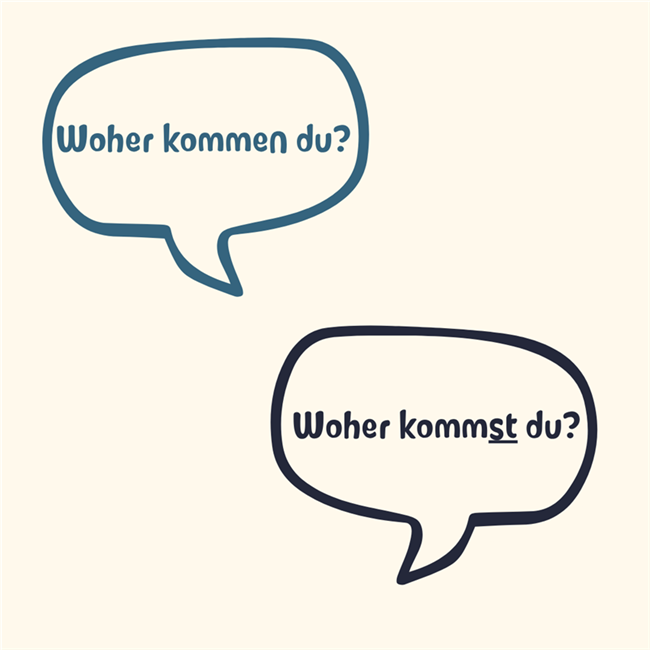
And then the grammar arrivesThis is the step that makes the whole thing work, and the order matters. Grammar does not come first. It comes after you have already tried and already noticed something was off. At that point the rule is not an abstract thing to memorize. It is the answer to a question you already had. Take the very first unit. You learn the question words: wer, wo, woher, was. Short, abstract little words that are hard to attach meaning to at first. Then you learn where the verb goes in a question that starts with one of them. The conjugated verb sits in position two, no matter how long the first part is: Wo wohnst du? Woher kommst du? Welche Sprachen sprichst du? Three different question words, three different lengths, and the verb never moves. Once that clicks, something shifts. You are no longer repeating my questions. You can build your own, because you know what goes where. And this pattern repeats. Every unit works the same way. In the unit on daily routines you learn to tell time and name your activities, and then the word order rules that let you string those into a sentence. By the end of each unit you are making whole sentences on your own, and you know the specific things that tend to trip up English speakers. Why this works better with other peopleYou can learn vocabulary alone. You can learn grammar rules alone. You can build strong passive skills entirely alone, and plenty of people do. What is difficult alone is the middle part. Trying, getting it slightly wrong, and having someone catch it immediately. There is also something that happens in a group that I did not fully appreciate until I had been teaching for a while. When you hear someone at your own level produce a sentence, struggle with the same word order you struggle with, and get it on the second try, it changes what you believe is possible for yourself. Not everyone needs that. But for a lot of learners it turns out to be the thing that keeps them going, more than any explanation I could give. My groups run from six to about ten people, and everyone speaks in every session. Not perfectly. Out loud, with support, with people who are stumbling through the same sentences and laughing about it together.
If this sounds like youIf your German is somewhere between "I learned this once" and "I can actually say this," you are not starting over. You are just missing the live part. I offer free get-to-know-you meetings for exactly this situation. We talk a bit, in German and English, and figure out together which level actually fits. Not a sales call. Often people arrive convinced they need to start from zero and it turns out they do not.
|
| Are You a Heritage Speaker? |
| By Frederike Dean on March 03, 2026 |
What That Means for Learning German?Over the years I've met a lot of people who grew up with German at home. Some knew exactly what they were: heritage speakers. Others had never heard the term. If you're not sure which category you fall into, keep reading.
So What Is a Heritage Speaker? What That Means for Learning German?A heritage speaker is someone who grew up exposed to a language at home but was educated primarily in another language. In the US, that often means German was spoken by parents, grandparents, or at family gatherings, but school, friendships, and daily life happened in English. There is an important difference between using a language at home and learning it structurally. At home, language covers everyday life. Getting dressed. Cleaning up. What's for dinner. That kind of language is real and useful, but it covers a very specific register. Expressing an opinion. Talking about abstract ideas. Navigating a professional situation or a conversation with strangers. That's a different layer of language entirely. And most heritage speakers never had the chance to develop it. Even people who are quite fluent often feel genuinely insecure the moment a conversation moves beyond the familiar. The result is a very particular kind of language knowledge. You understand a lot. You recognize words, catch the rhythm of a sentence, follow conversations. But when it's your turn to speak, something gets in the way. The words don't come, or they come out wrong, or you switch to English because it's just easier. You're not a beginner. But you're not fluent either. And that in-between space can be genuinely frustrating.
No Two Heritage Speakers Are the SameThis is probably the most important thing I can say: heritage speakers are not a single category. The spectrum is wide. Some grew up speaking German at home every day and still have strong active skills. Others only heard it occasionally from a grandparent, a grandmother teaching them words, cooking together, the language woven into small moments. Some have family still in Germany, Austria, or Switzerland and feel the gap every time they visit. Others haven't heard German regularly in decades. What they often share is this: passive knowledge tends to be stronger than active production. Understanding, reading, and recognizing come more easily than speaking, writing, and constructing sentences under pressure. That gap between what you understand and what you can say is real, and it's not a personal failing. It's just how language works when you absorb it without formal structure. And yes, that gap between passive and active skills exists for all language learners to some degree. Heritage speakers just tend to experience it more intensely, and often more emotionally.
You Have to Learn, Not Just RememberHere's something I've noticed over and over. Many heritage speakers approach German as if the language is somewhere inside them, waiting to be unlocked. Like a song you know but haven't heard in years. You're sure you know the words, but when the music starts, they don't come. The melody is real. The foundation is real. But being able to sing requires something different than just recognizing the tune.
That shift, from trying to remember to actually learning, is the key. And honestly, it's harder than starting from zero, because it means setting aside some of what you think you already know and building structure around it. Cases, grammar patterns, formal register. Things you may have absorbed intuitively but never consciously understood. One student I worked with knew a lot and could activate a lot. But she was learning German to be able to speak with her grandmother, and that weight made every mistake feel enormous. What she needed wasn't more vocabulary. She needed a safe space to build confidence in what she already had, and slowly fill in the gaps with structure. That's very different from what a traditional group course offers.
A Note on DialectsMany heritage speakers grew up hearing a specific regional variety: Bavarian, Swiss German, Austrian, Swabian. That's real German, and it's worth celebrating. But it sometimes leads to the expectation that a teacher can and should teach that specific dialect. Here's the honest answer: most German language instruction, including mine, is based on Standard German. That's the common ground, the foundation that works across all German-speaking regions. Dialects are a wonderful and very real part of the language, but they're not where structured learning starts. Even native speakers from Bavaria learn Standard German in school.
So Can Heritage Speakers Learn German in a Structured Course?Sometimes, yes. But it depends a lot on mindset. Heritage speakers who tend to do well in a structured group course are usually:
The advantage is real. The record isn't empty. There is already so much there to build on. But it requires a genuine willingness to learn the language, not just remember it. For heritage speakers who want something more flexible, my conversation membership SprachHorizonte might be a better starting point. Sessions are learner-led, topics are chosen by the group, and there is room for organic language exploration. A combination of both can also work.
The First Step
If you're not sure where you fall on the spectrum, the best thing to do is have a conversation. I offer free get-to-know-you meetings for exactly this reason, not to sell you a course, but to figure out together what actually makes sense for you. Every heritage speaker I've met has had a different story. That's what makes this so interesting, and so worth getting right.
|
| Learning Tip: Learn Through Lyrics 2025 |
| By Frederike Dean on January 05, 2026 |
Here's our 2025 Advent Calendar Spotify playlist with 25 German songs released this past year. You'll find everything from pop to punk, hip hop to electronic. Songs are great for learning German because the melodies help words stick in your memory. Plus you get to hear how German actually sounds today, including slang and regional accents you won't find in textbooks. Try this: Pick one song you like. Listen a few times, then look up the lyrics. You'll start recognizing phrases and expanding your vocabulary without it feeling like studying. Most of these artists have music videos on YouTube too.
Spotify Playlist 2025
|
| November Monthly Feierabend |
| By Frederike Dean on November 24, 2025 |
Last week we gathered for our November Monthly Feierabend at Good Society Brewery in West Seattle. November meetups are always well attended. Fall courses have just ended and people are ready to relax and actually USE their German outside of class. This time we had a nice mix: some brave beginners who just started this fall, our regulars who rarely miss a meetup, and as always, a new face or two. The backgrounds are so varied. Someone learned German decades ago as an exchange student and wants to refresh it. Another finally decided to learn their partner's language. Everyone has their own German story. The conversations flow naturally between German and English, depending on who's talking and what they're comfortable with. That's exactly the point. No pressure, just connection. Our December Monthly Feierabend will be at the Seattle Christmas Market. Perfect timing to practice your German while sipping Glühwein! Want to know more about upcoming meetups? Join our online community to check the calendar and RSVP. Community members can even organize their own events if they want to meet more often. Subscribe here to the mailing list to receive the invite. See you at the Christmas Market!
|
| Learning Tip: The Mistake Myth |
| By Frederike Dean on August 23, 2025 |
| Keep Your German Alive This Summer: 3 Fun Ways to Stay Connected to the Language During Break |
| By Frederike Dean on July 28, 2025 |
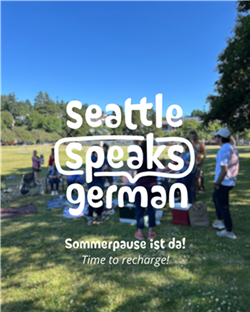
Summer break is finally here! After months of hard work and dedication to learning German, you've achieved so much this year. Now it's time to take a well-deserved break and recharge your batteries. But here's the thing about language learning: taking a complete break can sometimes mean losing momentum or forgetting what you've worked so hard to build. The good news? You don't have to choose between relaxation and language retention. With the right approach, you can keep your German skills sharp while still enjoying a refreshing summer pause. Why Maintaining German During Summer MattersWhen we take extended breaks from language learning, we risk what linguists call "language attrition" – the gradual loss of language skills due to lack of use. However, maintaining your German connection during summer doesn't mean intensive study sessions or grammar drills. Instead, it's about finding gentle, enjoyable ways to keep the language present in your daily life. 3 Effective Ways to Keep German in Your Summer1️⃣ Weekly Sprachdate (Language Date)One of the most effective and enjoyable ways to maintain your German is through regular conversation practice. A weekly Sprachdate – whether with a native speaker, fellow learner, or language exchange partner – keeps your speaking skills active without overwhelming your summer schedule. Benefits of regular Sprachdates:
Ideas for summer Sprachdates:
2️⃣ Label Your World in GermanThis simple yet powerful technique transforms your everyday environment into a German learning space. By labeling objects around your home, workspace, or daily route in German, you create constant, gentle exposure to the language. How to implement this strategy:
This method works because it integrates German into your existing routines without requiring extra time or effort. Every time you see a label, you're reinforcing vocabulary and keeping German active in your mind. 3️⃣ Pair German with Fun and Relaxing ActivitiesThe beauty of summer language maintenance lies in combining German with activities you already enjoy. This approach ensures that German becomes associated with pleasure and relaxation rather than work and stress.
Perfect summer combinations:
Finding Your German Community in SeattleIf you're in the Seattle metropolitan area, you don't have to maintain your German alone. Connecting with local German speakers and learners can provide both motivation and friendship during your summer break. Join Our Local Community: Finding a Sprachpartner in the Seattle area has never been easier. Our online community is designed to help German learners and speakers connect for language exchange, cultural activities, and friendship. To join:
Looking Ahead: Fall Restart and Community EventsWhile summer is about gentle maintenance and enjoyment, it's also good to have something to look forward to. Our structured classes will resume in September, providing the perfect opportunity to build on the foundation you've maintained during your summer break. Mark Your Calendar: Our popular monthly Feierabend (after-work social) returns on September 24th at Good Society Beer. This casual gathering is perfect for practicing conversational German in a relaxed, social setting while enjoying great local beer and meeting fellow German enthusiasts. Embrace Your SommerpauseRemember, the goal isn't to make massive leaps in your German proficiency during summer break. Instead, it's about:
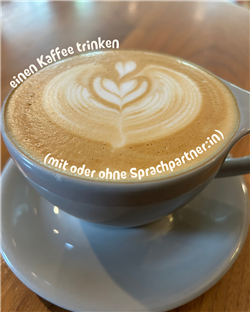
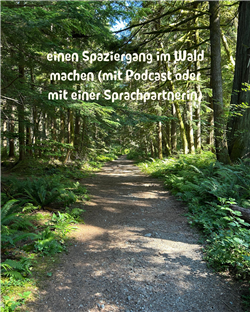
Take time to lie on paddle boards and gaze at the sky (in den Himmel schauen), enjoy coffee alone or with a Sprachpartner, and take peaceful walks in the forest. These moments of relaxation, when combined with gentle German practice, create the perfect balance for a rejuvenating yet productive summer break. Your Summer German Action Plan
Enjoy your summer, embrace the pause, and remember – even small, consistent connections with German will keep your skills warm and ready for your fall restart. Schöne Sommerferien! Ready to connect with German speakers in Seattle? Sign up for our mailing list to join our community and never miss updates about classes, events, and Sprachdate opportunities.
|
| Summer Fest in the Park [2025] |
| By Frederike Dean on June 30, 2025 |
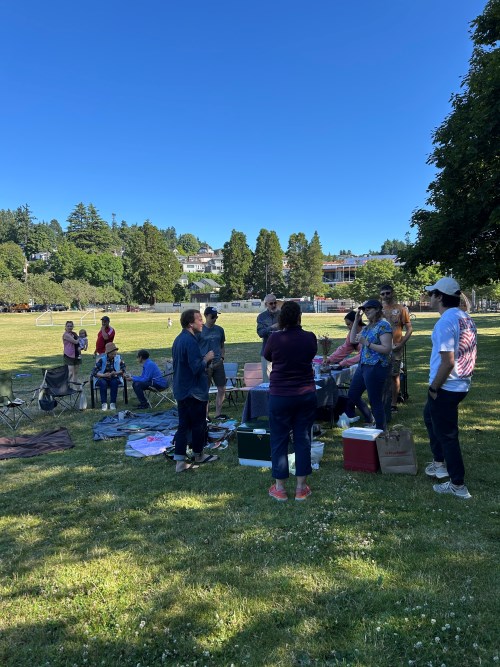
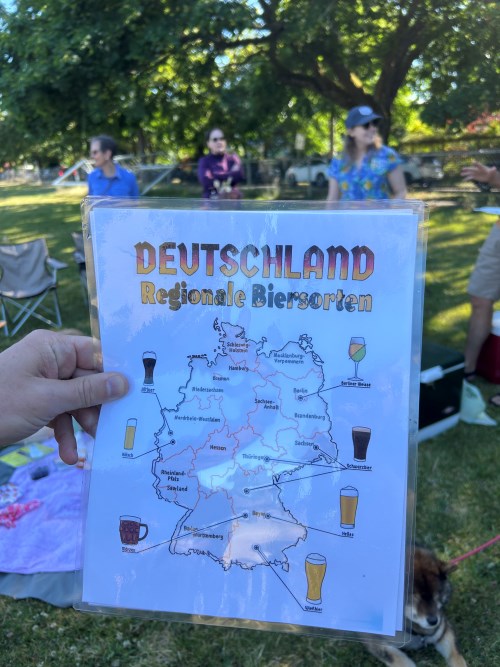
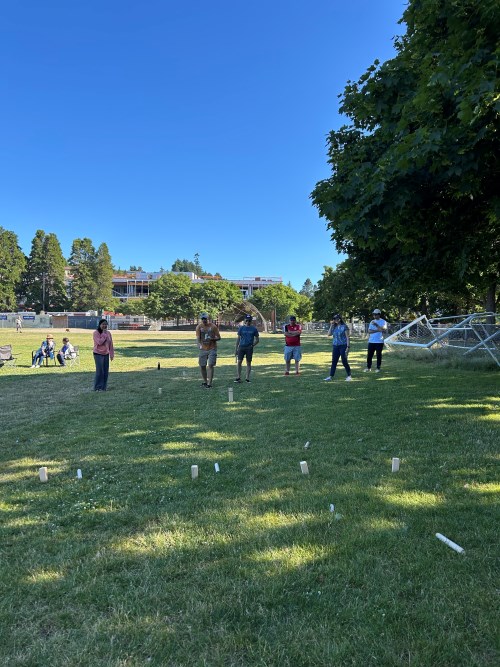
Before we headed into our summer break, we closed out the season with one last monthly gathering, our Sommerfest im Park. We met at Whale Tail Park in West Seattle where sunshine, conversation, and community came together in the best way. We shared a picnic, played a surprisingly competitive game of Kubb, and listened to a short presentation in German about non-alcoholic beer, complete with a map, interesting facts, and even a little taste test. As always, a mix of familiar and new faces joined us, and together we created a relaxed and welcoming space to speak, listen, and laugh. Moments like these remind us that learning a language is not just about grammar or vocabulary. It is about connection. It is about hearing German outside of class, using it in real conversations, and feeling part of something meaningful. Thank you to everyone who came. We are already looking forward to more shared moments in the fall.
|
| Watch John Cranko With Us at SIFF – May 23 |
| By Frederike Dean on April 30, 2025 |
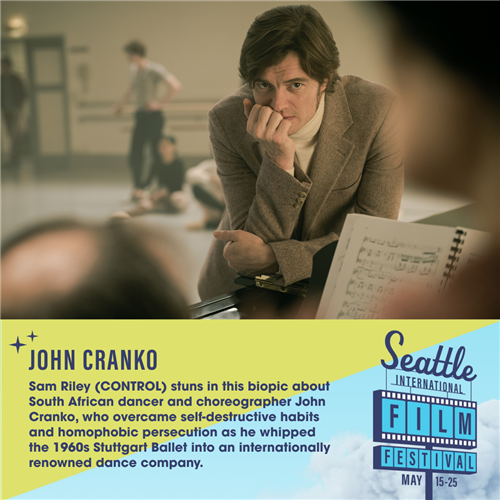
We’re going to the movies — and you’re invited! On May 23 at 6:00 PM, join us for a screening of the German documentary John Cranko at SIFF Cinema Downtown. The film is in German with English subtitles and tells the story of one of the most influential choreographers of the 20th century. Film: John Cranko
Win Free TicketsWe’re giving away two free tickets to this screening! Everyone who enters will receive a $3 discount code, even if they don’t win.
Want to hear about possible pre-movie plans?
|
| German Day at the Opera: A Cultural Experience |
| By Frederike Dean on March 10, 2025 |
The event featured a pre-performance talk in German that provided valuable context about the opera and Mozart's work. Following the show, we were treated to a special Q&A session with a German-speaking opera singer, allowing students to practice their language skills in a real-world cultural context. Since our German classes typically meet online, this outing created a valuable opportunity for students to connect in person. Sharing this artistic experience together strengthened our sense of community while deepening our appreciation for German language and culture. I was so thoroughly caught up in the moment—engaged with the performance and enjoying our group's interactions—that I completely forgot to document the experience with photos. Fortunately, I did manage to capture one image on our way into the theater. This special event perfectly embodied what language learning is truly about: not just studying vocabulary and grammar, but experiencing the living culture behind the language. |
| Planning a Trip to a German-Speaking Country? |
| By Frederike Dean on February 02, 2025 |
Our courses at Seattle Speaks German are designed to equip you with practical language skills tailored for travelers. In Beginner Level 1, you'll learn to introduce yourself and ask basic questions, essential for initial interactions upon arrival. Progressing to Beginner Level 2, we focus on ordering food and drinks, ensuring you can confidently navigate cafés and restaurants. By Beginner Level 3, you'll be able to tell time and discuss famous sights, enriching your sightseeing experiences. In Beginner Level 4, we cover asking for directions within buildings, helping you find your way in museums or hotels. Advancing to Beginner Level 5, you'll learn to express preferences and make purchases, useful for shopping excursions. Beginner Level 6 focuses on discussing daily routines and schedules, aiding in planning your travel itinerary. Finally, in Beginner Level 7, you'll be equipped to talk about future plans and travel arrangements, facilitating smoother logistics during your journey. Want to be travel-ready? Our German courses help you build practical communication skills for your trip. Check out our course offerings here and find the right level for you!
One of our students recently traveled to Austria and was thrilled to receive compliments on her German! These moments show how even a little practice can make a big difference in your travel experience. Of course, the best source for travel recommendations is our Seattle German learning community—many of our students are frequent travelers and love to share their experiences! If you're looking for insider tips, you're in the right place. For official travel guides, check out these websites:
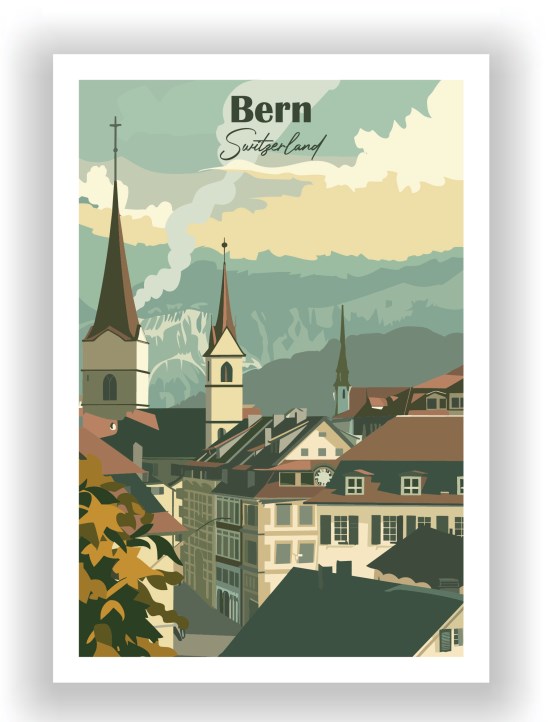
No matter where you start—Seattle or beyond—your German skills will help you feel at home in Berlin, Vienna, or Bern. Happy travels!
|

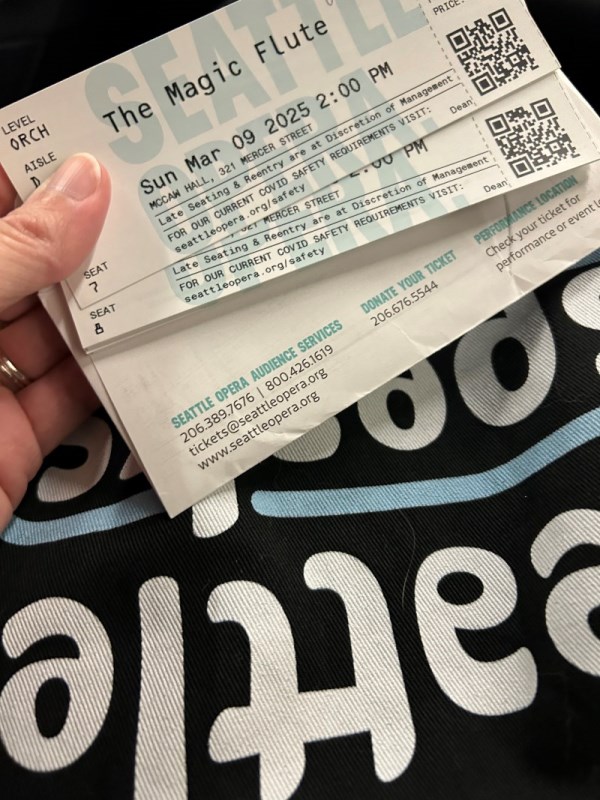 A huge Danke schön to Seattle Opera for inviting my German learners to experience Mozart's "Die Zauberflöte" (The Magic Flute) this past Sunday! It was a wonderful opportunity for our class to enjoy this masterpiece in its original German language, complete with enriching educational components tailored to language learners.